I'm a PhD candidate in Department of Computer Science NC State, supervised by Prof. Qiao Jin. Previously, I'm a second-year M.Eng. student in the Graduated School of Creative Science and Engineering at Waseda University, Tokyo, supervised by Prof. Hiroyasu Iwata. I also interned at Huawei and Ghelia, focusing on the intersection of artificial intelligence and human-computer interaction, particularly the development of VR/AR interaction systems.
Latest News
July 2026
IEEE TVCG Accepted
Exitced to annouce our paper has been conditional accepted by IEEE ISMAR26 and also selected as TVCG Journal paper!
March 2026
CHI26 Accepted
Exitced to annouce our paper “Understanding Prompt Construction and Interaction Challenges in LLM-Based Multi-Robot Systems for Spatial Tasks” has been accepted by ACM CHI26!
January 2026
IEEE TVCG Accepted
Exitced to annouce our paper “We Care More About What It Does: Priorities and Responsibilities in VR for Children and Families” has been accepted by IEEE VR26 and also selected as TVCG Journal Paper!
October 2025
Paper Won Best Short Paper Honorable Mention
Exitced to annouce our paper “From Tool to Partner: Exploring the Roles of Embodiment on AI Agent in Pair Programming” won Best Short Paper Honorable Mention at VL/HCC 2025!
July 2025
VL/HCC 2025 Accepted
My work “From Tool to Partner: Exploring the Roles of Embodiment on AI Agent in Pair Programming” has been accepted to VL/HCC 2025. Check the paper below!
Publications
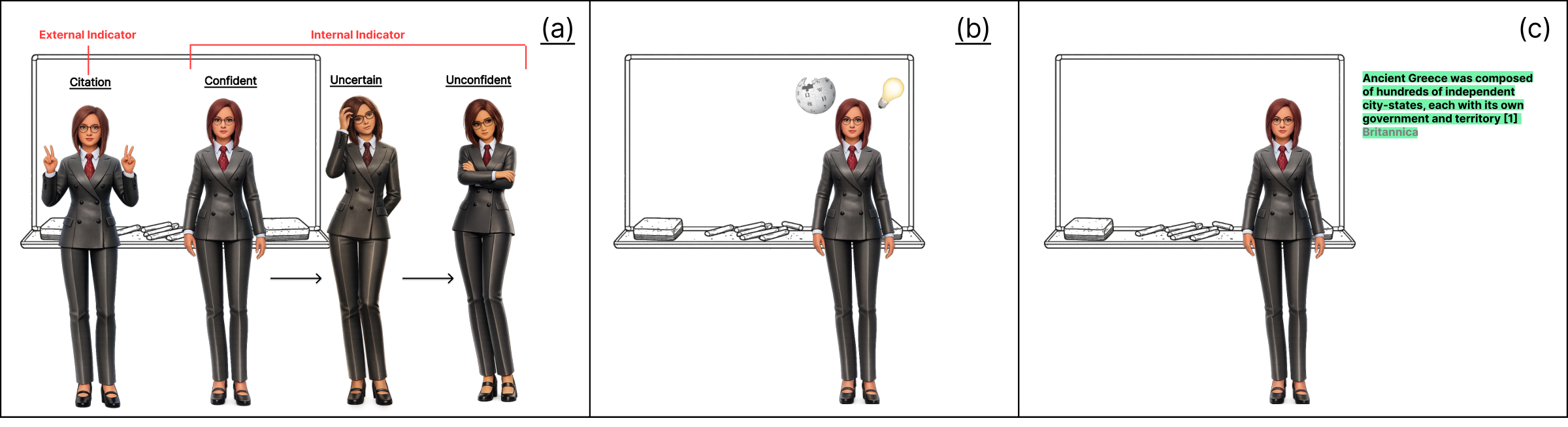
Signals of AI Hallucination: Designing Hallucination-Aware Cues for Embodied Conversational Agents in VR
Xiaoran Yang, Yang Zhan, Xie He, Yuxuan Huang, Yichen Yu, Zhuo Wang, Noboru Matsuda, Qiao JinIEEE TVCG
A VR study of how gesture, icon, and text cues help users notice when an embodied AI agent may be hallucinating, and how each affects trust and immersion.


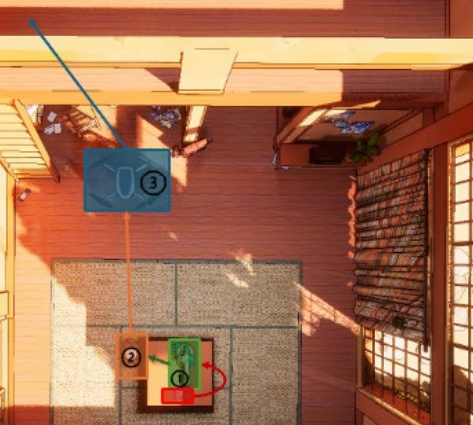
Understanding Prompt Construction and Interaction Challenges in LLM-Based Multi-Robot Systems for Spatial Tasks
Xiaoran Yang, Yang Zhan, Qiao JinCHI26 EA
A qualitative study on LLM-based multi-robot systems. Our findings highlight how users prompt for coordination and reveal that gaps in system visibility necessitate better interface and prompting support.
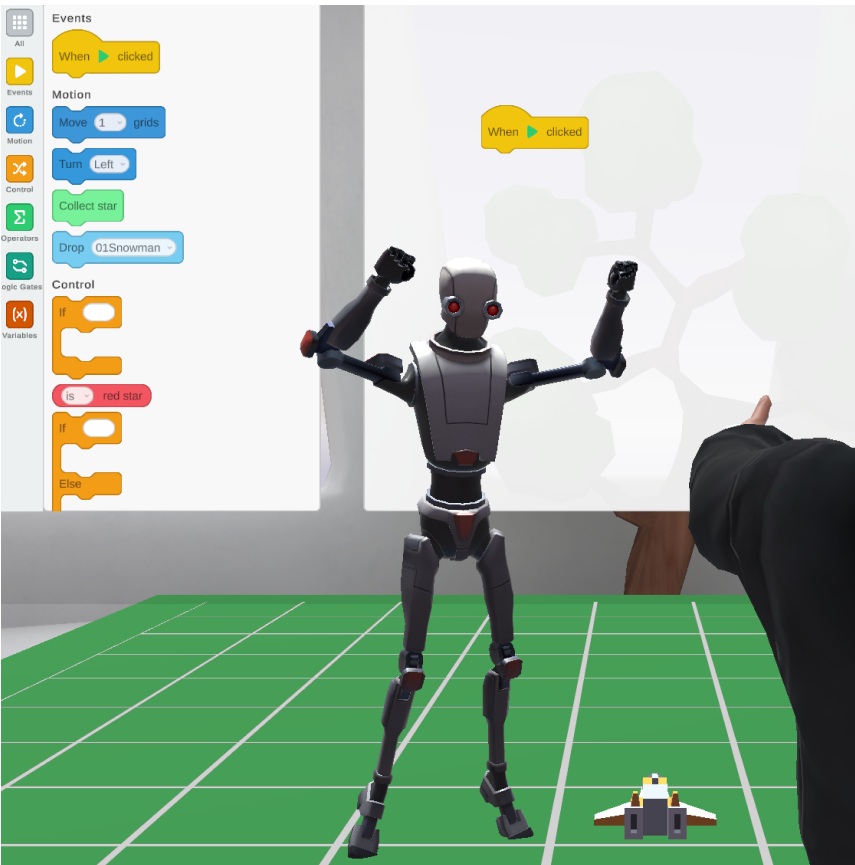
From Tool to Partner: Exploring the Roles of Embodiment on AI Agent in Pair Programming🏅
Xiaoran Yang, Yang Zhan, Noboru Matsuda, Qiao JinVL/HCC25
To address communication challenges in AI pair programming, paper investigates the role of an embodied AI agent in supporting programming learning and improving the user experience.